Rise of the Ottoman Military
The Ottoman Empire grew from a small Anatolian principality to one of the most powerful empires in history, lasting over six centuries. Ottoman military success rested on several innovations: the Janissary corps (an elite infantry force recruited from conquered populations), early and effective adoption of gunpowder artillery, and a disciplined system of military administration that allowed rapid mobilization across vast territories. At its peak, the Ottoman military was the most feared fighting force in the world.
The Fall of Constantinople
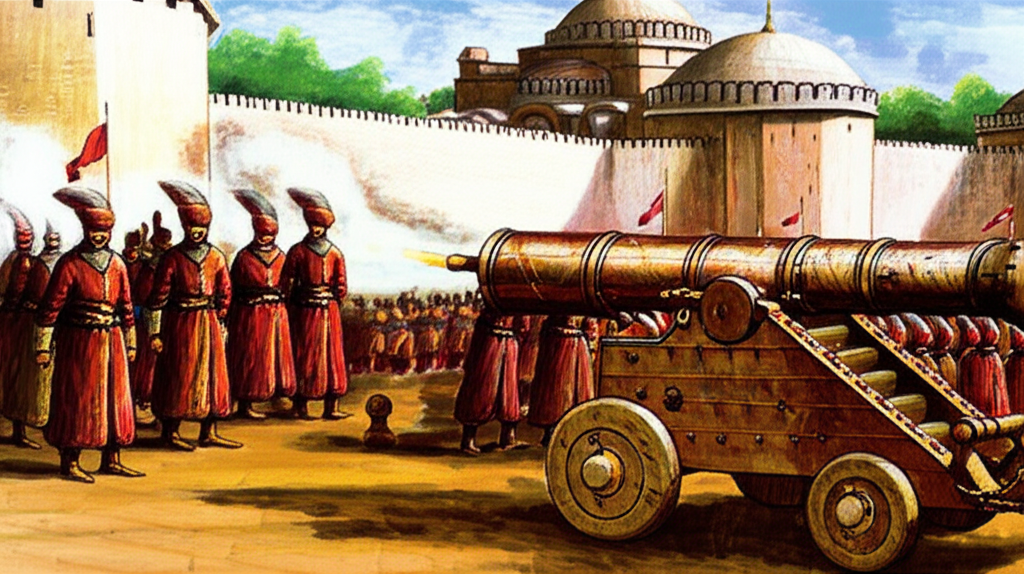
The Siege of Constantinople in 1453 was the Ottoman Empire’s defining military achievement. Sultan Mehmed II deployed massive cannons to breach the walls that had protected the city for over a thousand years. He also transported ships overland to bypass the chain blocking the Golden Horn. The fall of the Byzantine capital sent shockwaves across Europe and established the Ottoman Empire as a major world power, controlling the crucial crossroads between Europe and Asia.
- •The Orban cannon used at Constantinople was over 8 meters long and required 60 oxen to transport
- •Mehmed was only 21 years old when he conquered Constantinople
- •The city was renamed Istanbul and became the Ottoman capital for nearly 500 years
- •The fall prompted European powers to seek alternative sea routes to Asia, leading to the Age of Exploration
Expansion and Naval Power
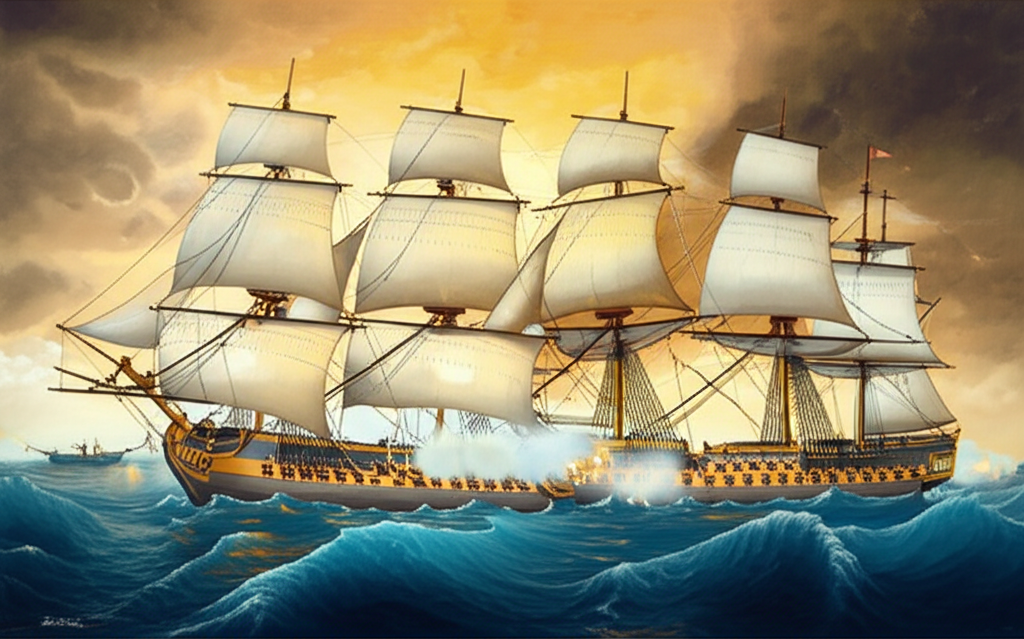
The Ottoman victory at Mohacs) in 1526 destroyed the Kingdom of Hungary and brought Ottoman power to the gates of Vienna. On the seas, the Battle of Preveza in 1538 established Ottoman naval dominance in the Mediterranean for decades. The epic Siege of Malta in 1565, though ultimately unsuccessful, demonstrated the reach and ambition of Ottoman military power. The Battle of Lepanto in 1571 was a significant naval defeat, but the Ottomans rebuilt their fleet within a year, showing the empire’s remarkable resilience.
The Janissaries: Elite Soldiers of the Sultan
The Janissary corps was one of the most remarkable military institutions in history. Originally recruited through the devshirme system (a levy of Christian boys from the Balkans), Janissaries were trained from childhood to be elite soldiers loyal only to the Sultan. They were among the first standing professional armies in Europe and among the earliest infantry forces to adopt firearms as their primary weapon.
- •Janissaries were forbidden from marrying or engaging in trade, ensuring total focus on military service
- •Their distinctive headgear and disciplined formations made them one of the most recognizable military forces in history
- •The corps eventually gained political power and became kingmakers, deposing sultans they opposed
- •The Janissaries were finally disbanded in 1826 during the modernization reforms of Mahmud II
Gunpowder and Innovation
The Ottomans were among the earliest and most effective users of gunpowder in warfare. The Battle of Chaldiran in 1514 demonstrated the superiority of Ottoman firearms against traditional cavalry tactics. Massive siege guns became an Ottoman specialty, and their artillery was decisive in campaigns from the Balkans to Egypt.
Ottoman Battles in BattleGuess
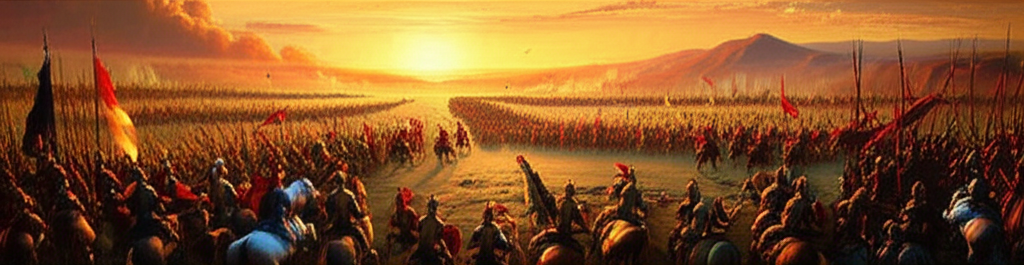
Ottoman battles in BattleGuess feature distinctive visual elements: Janissary troops with their characteristic headgear, massive siege cannons, galley fleets in the Mediterranean, and the architectural backdrop of mosques and minarets. These battles span nearly five centuries and appear in the Ottoman & Islamic era. Understanding Ottoman military evolution from early Anatolian raiders to gunpowder-equipped imperial forces helps identify the specific time period within this long and rich military history.