The Warrior Culture of Japan
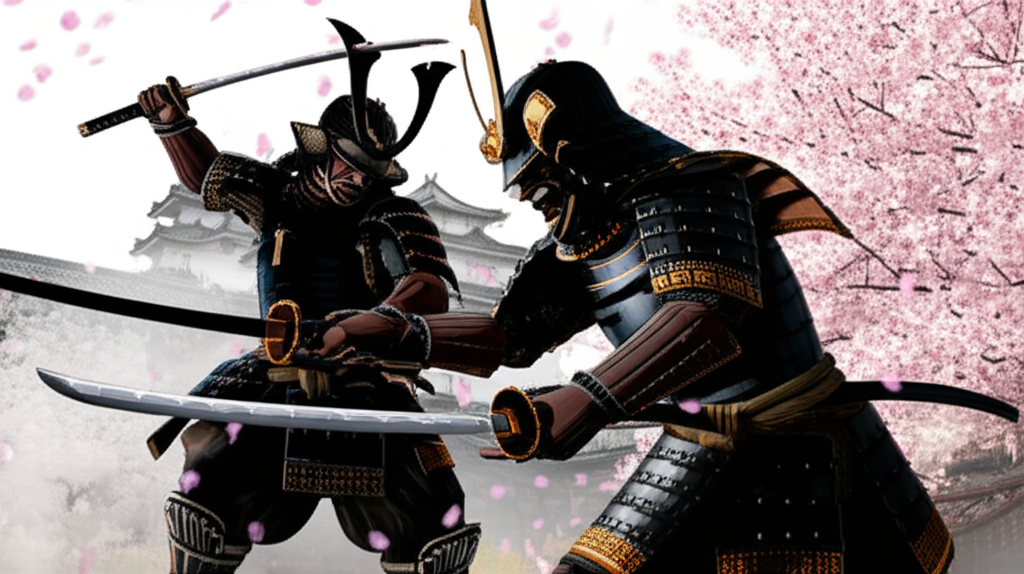
Japan’s feudal period produced one of the most distinctive warrior cultures in world history. The samurai, bound by the code of bushido, combined martial skill with philosophical discipline in a way that was unique among the world’s military traditions. Japanese warfare evolved from aristocratic mounted combat to massive infantry engagements involving hundreds of thousands of soldiers, incorporating gunpowder weapons while maintaining the sword as a symbol of status and honor.
The Genpei War and the Rise of the Shogunate
The Genpei War (1180-1185) between the Taira and Minamoto clans established the pattern of military government that would dominate Japan for seven centuries. The naval Battle of Dan-no-ura in 1185 ended the war and established the Kamakura Shogunate. This battle is one of the most dramatic in Japanese history, fought in the straits of Shimonoseki where powerful tidal currents played a decisive role in the outcome.
The Mongol Invasions
In 1274 and 1281, the Mongol Empire under Kublai Khan launched two massive invasions of Japan. The first invasion force of approximately 40,000 troops was repelled after a single day of fighting and a timely storm. The second invasion, one of the largest naval expeditions in pre-modern history, was destroyed by a typhoon the Japanese called the kamikaze) or "divine wind." These events profoundly shaped Japanese national identity and military culture.
- •The Mongol invasions exposed Japanese samurai to new tactics including massed archery and coordinated formations
- •Japanese coastal defenses were significantly strengthened after the first invasion
- •The kamikaze typhoons became a powerful symbol of divine protection in Japanese culture
- •The financial strain of defending against the Mongols contributed to the fall of the Kamakura Shogunate
The Sengoku Period: A Century of War
The Sengoku period, or Warring States era, saw Japan torn apart by competing feudal lords called daimyo. This era produced legendary commanders like Oda Nobunaga, Toyotomi Hideyoshi, and Tokugawa Ieyasu. The Battle of Okehazama in 1560 saw Nobunaga defeat a force ten times his size in a surprise attack during a thunderstorm. The Battle of Nagashino in 1575 demonstrated the power of massed firearms, and Sekigahara in 1600 unified Japan under Tokugawa rule.
What made the Sengoku so distinctive was the constant experimentation forced by survival pressure. Armies grew from a few thousand retainers to mass conscript hosts of peasant ashigaru infantry. Daimyo borrowed from each other relentlessly — Takeda Shingen’s cavalry shock, Uesugi Kenshin’s disciplined infantry, Nobunaga’s firearms, Hideyoshi’s siegecraft. The century produced a clear evolution: whoever combined the most elements fastest tended to win, which is why the final unifiers (Nobunaga, Hideyoshi, Tokugawa) were the generalists rather than the specialists.
Castles and Siege Warfare
Japanese castle design reached its peak during the late Sengoku and early Edo periods. Unlike European stone castles, Japanese castles used complex systems of stone walls, moats, and wooden structures designed to channel attackers into kill zones. The Siege of Osaka in 1614-1615 was the last major conflict of the feudal era, pitting the Tokugawa shogunate against the remnants of the Toyotomi clan in a battle that decided the political future of Japan for over 250 years.
- •Himeji Castle, a UNESCO World Heritage Site, is the finest surviving example of Japanese castle architecture
- •Japanese castles featured multiple baileys, winding approaches, and hidden positions for defenders
- •The Siege of Osaka involved over 300,000 combatants, making it one of the largest battles in Japanese history
Japanese Battles in BattleGuess
Japanese battles in BattleGuess are among the most visually distinctive in the game. Look for samurai armor with its distinctive helmet crests, castle walls with curved stone bases, and the unique landscape of the Japanese archipelago. The transition from sword-and-bow combat to gunpowder warfare is particularly visible in images from the late Sengoku period. Explore the East Asia era in BattleGuess to test your knowledge of these fascinating conflicts.
Bushido: Myth and Reality
The modern idea of bushido — an unwritten ancient code of absolute loyalty and ritual suicide — owes more to Meiji-era nationalism and the 1900 book *Bushido: The Soul of Japan* than to actual samurai practice. Real warrior conduct varied sharply by clan and era. Samurai regularly switched sides when their lord’s cause looked hopeless, negotiated ransoms, and pragmatically used whatever weapons worked. Seppuku existed but was rare outside specific shaming contexts. The most accurate description of pre-modern samurai ethics is that they were a professional warrior class with a strong honour culture, not saintly paragons of self-sacrifice.
Samurai Warfare Compared to the Wider World
Placing samurai battles next to their global contemporaries reveals surprising parallels and differences.
- •Early mounted archer samurai fought much like the Mongol and steppe warriors they eventually faced — bow-first, with the sword as a last resort
- •Sengoku pike-and-shot formations paralleled European tercio warfare almost exactly, developing independently around the same decades
- •Japanese castle design evolved in the opposite direction from European castles: upward with graceful wooden towers, while Europe went low and angular to resist cannon
- •The scale of Sengoku battles — Sekigahara had roughly 160,000 combatants — rivalled any European engagement of the period
- •Post-1600 Pax Tokugawa produced 250 years of near-peace, a length of internal stability few other pre-modern states matched
Keep Exploring BattleGuess
Japanese warfare connects to cavalry, gunpowder, and tactical doctrines from around the world. These companions expand the picture.
- •The History of Cavalry: From Chariots to Tanks — the mounted warriors samurai descended from
- •How Gunpowder Changed Warfare Forever — why Nagashino was a world-historical turning point
- •The Greatest Military Commanders of All Time — Oda, Hideyoshi, and Tokugawa in global context
- •Battlefield Tactics Explained for Beginners — the tactical vocabulary behind Okehazama and Sekigahara
- •Study samurai-era battles in the Battle encyclopedia or test yourself with a fresh game mode round.