Why Some Battles Matter More Than Others
Throughout human history, thousands of battles have been fought across every continent. Yet only a handful fundamentally altered the trajectory of civilizations. A decisive battle is not simply one with high casualties — it is one where the outcome directly changed political borders, toppled empires, or redirected the flow of culture and technology. The battles on this list were chosen because their results echoed for centuries, shaping the languages we speak, the borders we recognize, and the governments we live under.
Criteria for Ranking Decisive Battles
Historians have long debated which battles truly changed history. Edward Creasy published his famous "Fifteen Decisive Battles of the World" in 1851, establishing a template that military historians still reference. Our criteria consider three factors: the immediate political consequence of the battle, the long-term cultural impact on civilization, and the degree to which the losing side’s trajectory was permanently altered.
- •Political impact — did the battle change borders, topple governments, or create new states?
- •Cultural legacy — did the outcome shape languages, religions, or social systems for centuries?
- •Counterfactual significance — would the world look fundamentally different if the other side had won?
The Ancient World: Thermopylae and Gaugamela
The Battle of Thermopylae in 480 BCE, where 300 Spartans and their Greek allies held a narrow pass against the massive Persian army of Xerxes I, became a legendary symbol of courage against overwhelming odds. Though the Greeks ultimately lost the pass, the delay allowed Athens to evacuate and prepare the navy that won at Salamis. The Persian Wars are covered extensively by Herodotus, often called the father of history.
A century and a half later, Alexander the Great defeated Darius III at the Battle of Gaugamela in 331 BCE, effectively ending the Persian Empire and spreading Greek culture across the known world from Egypt to India. Alexander’s campaigns created the Hellenistic world, a cultural fusion of Greek and Eastern traditions that persisted for centuries.
Medieval Turning Points: Hastings and Constantinople
The Battle of Hastings in 1066 saw William the Conqueror defeat the Anglo-Saxon King Harold II, forever changing the language, culture, and legal system of England. The Norman victory introduced feudalism and French-influenced governance to the British Isles, the effects of which are still visible in English law and vocabulary today. The Bayeux Tapestry, a 70-meter embroidered cloth, remains the most famous visual record of any medieval battle.
Nearly four centuries later, the Fall of Constantinople in 1453 marked the end of the Byzantine Empire when Ottoman forces breached the ancient walls. This event closed the overland trade routes to Asia and spurred European powers to seek sea routes, ultimately leading to the Age of Exploration.
The Napoleonic Era: Waterloo
The Battle of Waterloo in 1815 ended Napoleon Bonaparte’s rule as Emperor of France and reshaped the political map of Europe for a century. The combined British, Prussian, and allied forces defeated Napoleon’s army in present-day Belgium, leading to his exile on Saint Helena. The Congress of Vienna that followed established a balance of power in Europe that held until World War I. Waterloo demonstrated that even the most brilliant military commander could be undone by coalition warfare and logistical overextension.
The World Wars: Stalingrad and Midway
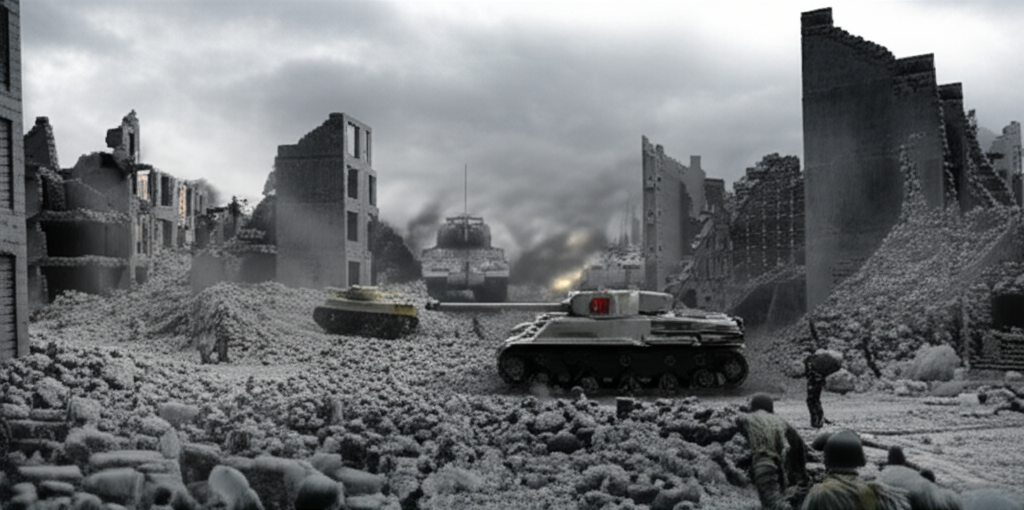
The Battle of Stalingrad, fought from August 1942 to February 1943, was the bloodiest battle in human history and marked the turning point of the Eastern Front in World War II. The Soviet encirclement and destruction of the German 6th Army shattered the myth of Wehrmacht invincibility and began the long Soviet push westward to Berlin.
In the Pacific, the Battle of Midway in June 1942 saw the United States Navy sink four Japanese aircraft carriers in a single engagement, shifting naval superiority in the Pacific and putting Japan on the defensive for the remainder of the war. The National WWII Museum provides excellent resources for exploring these engagements in depth.
Honourable Mentions
Several other battles came close to making this list. Each of them shaped major turning points in regional or global history.
- •Marathon (490 BCE) — preserved Greek democracy from Persian conquest
- •Cannae (216 BCE) — Hannibal’s tactical masterpiece that became the textbook for military envelopment
- •Saratoga (1777) — brought France into the American Revolution, ensuring American independence
- •D-Day (1944) — the largest amphibious invasion in history opened the second front in Europe
- •The Somme (1916) — a defining moment of World War I that shaped a generation’s view of warfare
Test Your Knowledge
These ten battles represent just a fraction of the military encounters that shaped our world. Each one involved real people making decisions under extraordinary pressure, and understanding them gives us insight into how the modern world came to be. Think you can identify these battles from a single image? Try identifying these battles in BattleGuess and see how your knowledge of military history stacks up.