Why Naval Battles Matter
Control of the seas has been a deciding factor in geopolitics for over three thousand years. Nations that dominated the water could project power across continents, protect trade routes, and strangle enemy economies. Many of the most consequential battles in history were fought not on land but on the open water, where weather, seamanship, and technology determined the fate of entire civilizations. As Alfred Thayer Mahan argued in "The Influence of Sea Power upon History," naval supremacy has been the single most important factor in determining which nations rise to global dominance.
The Ancient Mediterranean: Salamis and Actium
The Battle of Salamis in 480 BCE is one of the earliest naval engagements that changed the course of civilization. The Greek fleet, led by Themistocles, lured the much larger Persian navy into the narrow straits near Athens, where the smaller Greek triremes could outmaneuver their opponents. The trireme, powered by three rows of oarsmen, was the dominant warship of this era.
Four centuries later, the Battle of Actium in 31 BCE decided the fate of Rome when Octavian defeated the combined fleets of Mark Antony and Cleopatra, paving the way for the Roman Empire.
The Age of Sail: Trafalgar and the Spanish Armada
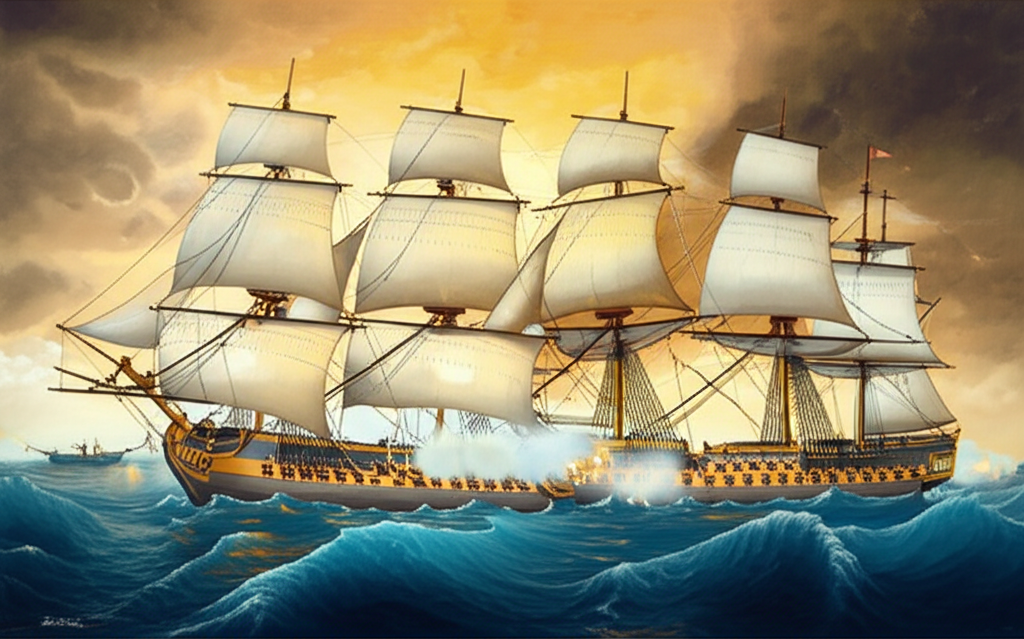
The defeat of the Spanish Armada in 1588 established England as a naval power and marked the beginning of the decline of Spanish dominance. Over two centuries later, Admiral Nelson won the Battle of Trafalgar in 1805, securing British naval supremacy for the next century. Nelson’s death during the battle made him a national hero, and his tactics — breaking the enemy line rather than fighting in parallel — revolutionized naval warfare.
- •The Spanish Armada consisted of 130 ships, but English speed and weather proved decisive
- •Nelson’s signal at Trafalgar — "England expects that every man will do his duty" — became legendary
- •Trafalgar ensured British naval dominance that lasted through both World Wars
The Transition to Modern Navies
The 19th century saw a revolution in naval technology. Steam power replaced sails, iron and steel replaced wood, and explosive shells replaced solid cannonballs. The Battle of Hampton Roads in 1862 between the ironclads USS Monitor and CSS Virginia demonstrated that wooden warships were obsolete. The Battle of Tsushima in 1905, where the Japanese fleet destroyed the Russian Baltic Fleet, proved that modern naval warfare required not just technology but training, doctrine, and national industrial capacity.
The World Wars: Midway and Leyte Gulf
World War II saw naval warfare transformed by aircraft carriers and submarines. The Battle of Midway in 1942 was the turning point of the Pacific War, while the Battle of Leyte Gulf in 1944 was the largest naval battle in history by tonnage. The Battle of the Coral Sea was the first naval engagement where the opposing ships never saw each other, fighting entirely through carrier-launched aircraft. These battles proved that the age of the battleship was over and air power now ruled the seas.
Test Your Naval Knowledge
Naval battles have a distinctive visual vocabulary: ships under sail, cannon smoke across the water, aircraft diving toward carriers, and submarines lurking beneath the waves. In BattleGuess, naval battles are some of the most visually striking and recognizable images in the game. Check out our Naval Battles collection to explore all the maritime engagements, or jump into a game and see if you can identify these famous sea fights from their images.